


You lose a tooth and think it is only a cosmetic issue. Then you notice that chewing feels different, food keeps getting stuck in the gap, or you start avoiding photographs because the missing tooth is visible.
Replacing a missing tooth can involve more than improving appearance. Dental implants are one option that can be considered when a patient needs a long-term replacement for a missing tooth.
A gap can change how you chew and may affect the position of nearby teeth over time.
That does not mean every missing tooth requires an implant. Your dentist needs to consider the location of the missing tooth, gum health, available bone, bite, and other individual factors.
The first step in implant treatment is not implant placement.
It is diagnosis. Your dentist needs to understand your oral health and determine whether an implant is appropriate before discussing the final treatment plan.
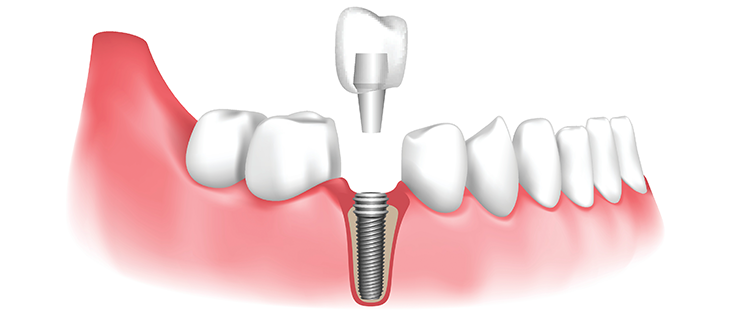
A dental implant is a small structure placed into the jawbone to support a replacement tooth.
Once the implant has healed and become sufficiently stable, a dental crown can be attached to restore the visible tooth. The aim is to provide a functional and natural-looking replacement.
Dental implants may be discussed if you have:
A single missing tooth
Several missing teeth
Difficulty chewing because of tooth loss
An unsuitable or uncomfortable existing replacement
A visible gap affecting your confidence
A tooth that cannot be saved
Concerns about replacing missing teeth for the long term
However, suitability varies from patient to patient.
Dental implants are not a shortcut.
Some advertisements make implant treatment sound like a quick replacement where you walk into a clinic with a missing tooth and leave with a permanent new tooth immediately.
Real treatment can involve examination, imaging, planning, implant placement, healing, and restoration.
implant dentistry is about planning the entire process—not simply placing the implant.
We have seen patients come in expecting an implant immediately because they had already decided that it was the solution they wanted.
After examination, the discussion sometimes changes. A patient may need treatment for gum disease, additional assessment of the bone, or consideration of alternative tooth-replacement options before an implant can be planned.
That first assessment can prevent patients from making decisions based on incomplete information.
Your dentist examines your teeth, gums, bite, and overall oral condition.
Appropriate imaging may be used to assess the tooth area, roots, jawbone, and surrounding structures.
The dentist determines implant position, restoration type, and whether any additional treatment is required.
The implant is placed into the planned position under appropriate anaesthesia.
The implant needs time to heal and integrate with the surrounding bone before the final restoration is fitted.
Once the implant is ready, a custom crown can be attached to complete the replacement tooth.
The exact timeline varies according to the individual case.
Several factors can influence treatment planning, including:
Gum health
Jawbone condition
Oral hygiene
Smoking and other lifestyle factors
Bite forces
Number and location of missing teeth
Existing dental conditions
Need for additional procedures
Your dentist should discuss these factors before treatment begins.
If you are searching for Dental Implants Treatment in DLF Phase 3, ask:
Am I a suitable candidate?
Are there alternatives to an implant?
Is my bone condition adequate?
Will I need additional treatment?
How long could the complete process take?
What type of crown will be used?
What maintenance will I need afterward?
Clear answers are more useful than choosing treatment based only on promotional claims.
The World Health Organization estimates that oral diseases affect nearly 3.7 billion people globally. Tooth loss can result from untreated decay, gum disease, trauma, or other dental conditions.
For patients with missing teeth, the important step is to identify the cause and assess the condition of the remaining teeth and supporting tissues before choosing a replacement.
Smile Miles Dental & Aesthetic provides comprehensive restorative and implant-focused dental care, including dental implants, crowns, bridges, root canal treatment, preventive dentistry, orthodontics, and cosmetic procedures. Our approach is to assess each patient's oral condition and explain suitable treatment options before proceeding.
An implant and crown may be considered when one tooth is missing and the surrounding conditions are suitable.
Patients with several missing teeth may have different implant-supported replacement options depending on their individual needs.
For selected patients with extensive tooth loss, implants may provide additional support to a denture.
The crown is the visible replacement tooth designed to restore appearance and chewing function.
Detailed examination and appropriate imaging help the dentist plan implant placement and the final restoration.
Implant placement is performed using appropriate anaesthesia. Some swelling, soreness, or discomfort can occur during healing, and your dentist will provide aftercare instructions.
It varies. Some patients may have relatively straightforward treatment, while others require healing periods or additional procedures before the final crown can be placed.
Implants are designed as long-term tooth replacements, but their longevity depends on oral hygiene, gum health, bite forces, lifestyle, maintenance, and professional follow-up.
If you are living with a missing tooth, you do not have to decide on an implant immediately.
Book a consultation at Smile Miles Dental & Aesthetic to have your teeth and gums assessed and understand whether dental implants or another replacement option is appropriate for you.
| Tags: | # Dental Implants Treatment in DLF Phase 5 , # Dental Implants Treatment in Golf Course Road, # Dental Implants Treatment in DLF Phase 1 , # Dental Implants Treatment in DLF Phase 2 |


