


You lose a tooth and initially think, “I can manage with the rest.” Months later, chewing feels different, you avoid certain foods, or you become conscious of the gap whenever you smile.
Missing teeth are not only about appearance. They can affect chewing, speech, confidence, and the way the surrounding teeth function. This is where dental implants may become an option worth discussing with a dentist.
A single missing tooth may seem like a small problem, especially if it is toward the back of your mouth.
Over time, however, the gap can affect how you bite and chew. Nearby teeth may also shift into the empty space, making future dental treatment more complicated.
Dental implants are not automatically the right choice for everyone. Your dentist needs to assess your gums, jawbone, overall oral condition, and the reason the tooth was lost.
A proper examination helps determine whether an implant, bridge, denture, or another option is more suitable.
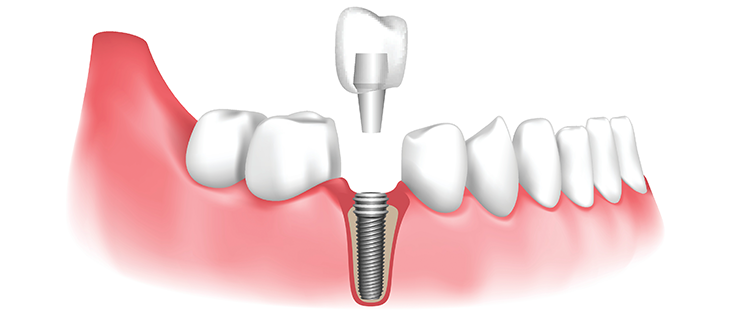
A dental implant is a small structure placed into the jawbone to support a replacement tooth. After the area heals and the implant becomes stable, a dental crown can be attached to restore the visible part of the tooth.
The result is designed to look and function more like a natural tooth than a removable replacement.
You may want to consult a dentist about dental implants if you have:
One or more missing teeth
Difficulty chewing because of missing teeth
A removable denture that feels uncomfortable
A failing or unsuitable bridge
A tooth that cannot be saved
A visible gap affecting your smile
Concerns about long-term tooth replacement
The important point is that implant treatment starts with diagnosis, not with the implant itself.
Dental implants are often marketed as the “best” solution for missing teeth.
That is too simple.
An implant can be an excellent option for a suitable patient, but it is not automatically the right treatment for every missing tooth. Bone condition, gum health, oral hygiene, medical factors, expectations, treatment time, and budget all matter.
A good dentist should explain the alternatives instead of pushing one procedure.
Dental implant treatment usually involves several stages.
The dentist examines your teeth and gums and may recommend dental imaging to understand the bone and surrounding structures.
If an implant is appropriate, the dentist plans the position of the implant and the replacement tooth. In some cases, additional procedures may be needed before implant placement.
The implant is placed in the jawbone using a planned surgical procedure. Healing time is then allowed for the implant to become stable.
Once the implant is ready, a custom dental crown can be attached to complete the restoration.
The exact timeline varies from patient to patient, so promises of an identical treatment duration for everyone should be treated carefully.
We have seen patients who initially wanted to replace a missing tooth simply because they disliked the gap in photographs.
After discussing their situation, the conversation often becomes much broader: how they chew, whether neighbouring teeth have moved, how long the tooth has been missing, and what kind of maintenance they are comfortable with.
That discussion matters because successful dental treatment is not just about replacing a tooth. It is about choosing an option that fits the patient's oral health and daily life.
Dental implants require planning. A dentist needs to evaluate the condition of the jawbone, gums, bite, and neighbouring teeth before recommending treatment.
For anyone searching for Dental Implants in DLF Phase 2, focus on the quality of diagnosis and treatment planning rather than choosing a clinic based only on advertisements or the lowest quoted price.
Before beginning treatment, ask:
Is an implant suitable for my condition?
Are there alternatives?
Do I need any additional treatment first?
How long could the overall process take?
What maintenance will the implant require?
What are the expected costs at each stage?
Clear answers can help you make a more informed decision.
The scale of oral disease shows why missing teeth and other dental problems should not simply be ignored. In its March 2025 oral-health update, the World Health Organization estimated that oral diseases affect nearly 3.7 billion people worldwide. WHO also notes that many oral conditions can be prevented or treated, particularly when addressed early.
For patients with missing teeth, that reinforces the importance of proper dental assessment rather than waiting until other problems develop.
Smile Miles Dental & Aesthetic provides comprehensive dental care with a focus on diagnosis, treatment planning, restorative dentistry, implants, cosmetic procedures, and preventive care. Our approach is to understand each patient's dental condition first and then explain suitable treatment options clearly.
A single implant can be considered when one tooth is missing and the surrounding teeth are otherwise suitable.
Patients missing several teeth may have different implant-supported options depending on their bone and oral health.
Implants can sometimes be used to provide additional support for dentures, helping improve stability.
Healthy supporting tissues are important for implant treatment. Your dentist may recommend treatment to improve oral conditions before proceeding.
The crown is the visible replacement tooth attached to the implant and is designed according to your bite, function, and smile.
The procedure is performed with appropriate local anaesthesia. Some soreness or discomfort can occur during healing, but your dentist will provide aftercare instructions to manage it.
The timeline varies. Some cases can be completed relatively quickly, while others require healing or additional procedures before the final tooth can be placed.
Age alone does not determine whether implants are suitable. Your dentist will consider your oral health, bone condition, general health, and ability to maintain good dental hygiene.
If you have been living with a missing tooth, you do not have to decide on treatment immediately. Start with a proper dental examination and understand what options are available for your particular situation.
Book a consultation at Smile Miles Dental & Aesthetic to discuss dental implants and suitable alternatives for your missing teeth.
| Tags: | # Dental Implants in DLF Phase 5 , # Dental Implants in Golf Course Road, # Dental Implants in DLF Phase 1 , # Dental Implants in DLF Phase 2 |


