


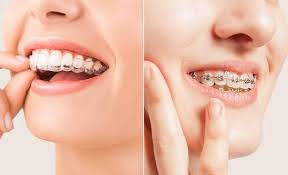
Do you avoid smiling in photos because your teeth look crowded, uneven, or spaced out? Maybe you have been thinking about braces or clear aligners but keep postponing the decision because you are unsure which option would actually suit you.
Braces and aligners can improve more than appearance. They can help correct certain bite problems, make teeth easier to clean, and create a healthier foundation for long-term oral care.
Orthodontic treatment is not only about getting perfectly straight teeth. Crowding, gaps, overbites, underbites, crossbites, and certain alignment problems can affect how your teeth meet and function.
If your teeth overlap heavily, cleaning between them may also become difficult. A proper orthodontic assessment can help identify whether treatment is appropriate and which approach may fit your needs.
Traditional braces use brackets and wires to gradually move teeth into planned positions. They can be suitable for many types of orthodontic corrections and do not depend on the patient remembering to remove and wear them.
Clear aligners are removable trays designed to move teeth progressively. They are discreet and can be convenient for people who want a less noticeable treatment option.
The right choice depends on factors such as your alignment, bite, treatment complexity, lifestyle, and ability to follow wearing instructions.
Clear aligners are often marketed as the obvious modern alternative to braces. But “invisible” does not automatically mean “better.”
An aligner may be convenient for one person and unsuitable for another. Treatment planning matters more than whether the appliance is made from metal or clear material.
That is why an orthodontic consultation should come before choosing a treatment based purely on appearance.
Consider someone who has mild crowding and works in a professional environment. They may prefer clear aligners because they want something less noticeable during meetings.
Another patient may have a more complicated bite concern where fixed braces are considered as part of the treatment plan. Both patients want straighter teeth, but their treatment needs can be completely different.
The lesson is simple: orthodontics should be planned around the individual, not a trend.
Your orthodontic journey usually begins with an examination of your teeth and bite. Depending on your situation, dental records or imaging may be recommended to understand tooth positions and supporting structures.
The dentist or orthodontic professional then discusses suitable options, expected treatment stages, maintenance, and retention.
During treatment, regular follow-ups help monitor progress and make necessary adjustments. After active treatment, retainers are commonly used to help maintain the new tooth positions.
It is normal to experience some pressure or mild discomfort when braces are adjusted or when a new aligner is introduced. This generally reflects the pressure involved in moving teeth.
oral hygiene becomes especially important during orthodontic treatment. Braces can create additional areas where food and plaque collect, while aligners require proper cleaning and consistent wear according to professional instructions.
The World Health Organization’s recent oral-health reporting continues to highlight the enormous global burden of oral diseases, affecting billions of people. This reinforces why dental care should focus not only on appearance but also on prevention, function, and long-term oral health.
Smile Miles Dental & Aesthetic provides comprehensive dental care, including orthodontic consultations, braces, clear aligners, preventive dentistry, and cosmetic treatments. Our approach is to understand each patient’s dental needs first, explain available options clearly, and recommend treatment based on oral health, comfort, function, and individual goals.
Metal braces use brackets and wires to apply controlled pressure to teeth. They remain a widely used orthodontic option for different alignment and bite concerns.
Clear aligners are removable trays designed to gradually move teeth. They can be an option for suitable cases where discretion and removability are important.
Orthodontic treatment can address certain bite concerns, including overbite, underbite, crossbite, and other alignment issues depending on the individual case.
Retainers help maintain tooth positioning after active orthodontic treatment. Following the recommended retention plan is an important part of protecting treatment results.
A professional assessment helps determine whether braces, aligners, or another approach may be appropriate for your teeth, bite, and treatment goals.
Not necessarily. Both have different advantages and limitations. The appropriate option depends on your dental condition, treatment complexity, lifestyle, and professional assessment.
Treatment duration varies significantly from person to person. Mild alignment concerns may require less time than complex bite or tooth-position problems.
Braces may cause temporary pressure or mild discomfort, particularly after placement or adjustments. Your dental professional can explain what to expect and how to manage normal discomfort.
If crooked teeth, gaps, crowding, or bite concerns have been bothering you, you do not have to decide between braces and aligners on your own.
Book a consultation at Smile Miles Dental & Aesthetic to understand whether braces, clear aligners, or another orthodontic approach may be suitable for your smile.
| Tags: | # Braces and Aligners in DLF Phase 5 , # Braces and Aligners in Golf Course Road, # Braces and Aligners in DLF Phase 1 , # Braces and Aligners in DLF Phase 2 |


